

Kinematic Viscosity
Description
The most important parameter of any lubricant, determining the fluid's resistance to flow under gravity and its ability to form a protective film.
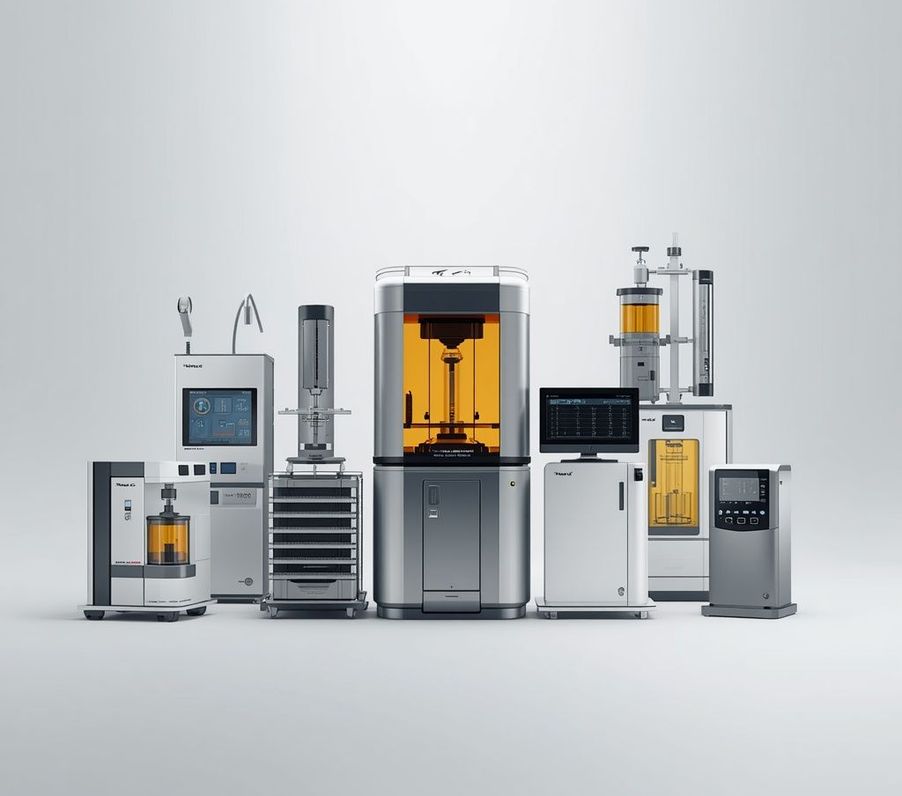
Kinematic viscosity is the «passport» and blood type of your lubricant. This single indicator determines whether the oil can create a strong enough hydrodynamic film to separate metal parts, whether it will be squeezed out of the bearing, and whether the oil pump can circulate it through the system. Kinematic viscosity analysis at the RENA laboratory is a fundamental quality control that allows for instant confirmation of the fresh oil's grade and detection of critical problems in in-service oil (fuel dilution or thickening due to oxidation). Instead of outdated glass tubes, we use the state-of-the-art Austrian Stabinger SVM 3001 viscometer from Anton Paar (equivalent to the ASTM D445 / ASTM D7042 method). This instrument is a masterpiece of engineering: it contains a rotating outer rotor and an ultra-light inner rotor that floats in the oil sample under centrifugal force. Built-in sensors measure the rotation speed of the inner rotor, which is directly proportional to the fluid's dynamic viscosity. Simultaneously, in the same cell, an oscillating U-tube sensor measures the exact density of the sample. The microprocessor instantly divides the dynamic viscosity by the density and outputs an extremely accurate kinematic viscosity. The system is equipped with Peltier elements that maintain the set temperature (usually 40 °C or 100 °C) with incredible accuracy down to 0.005 °C, eliminating any temperature error inherent in old water baths.
Standard:
ASTM D445
Test equipment:
SVM 3001
Sample quantity:
10 ml
Unit:
mm²/s (cSt)
Test result:
Viscosity at a given temperature
Result range:
0.5 - 5000 mm²/s
Turnaround time:
24 hours
Target product:
All types of oils and fuels


